Planning
8 min read
How to Decide the Best Event Format: In-Person, Virtual, or Hybrid?
Choosing the right event format affects your budget, audience reach, attendee experience, and ROI. Compare in-person, virtual, and hybrid events and learn what to consider before you decide.

Choosing between an in-person, virtual, or hybrid event affects almost every other decision you make. Your budget changes. Your technology needs to change. Your audience reach changes. Even the way you measure success changes.
The right format depends on four things: your budget, event dates, expected headcount, and space requirements. Get those four decisions right early, and you have a much clearer path to planning an event that works for your audience and your business.
In this guide, we'll compare the three main event formats and look at:
Which format fits different event goals
The real costs behind each format
Technology and connectivity requirements
Revenue and ticket pricing strategies
Hidden costs and contract risks
How to measure format performance and ROI
Start With the Four Things That Matter Most
Before choosing a format, get clear on four basic requirements:
Budget: How much do you have to spend?
Event dates: How much time do you have to plan and produce the event?
Headcount: How many people do you expect to attend?
Space requirements: Do you need a physical venue, a digital platform, or both?
These four factors quickly narrow your options.
A 30-person internal workshop doesn't need the same infrastructure as a 500-person conference. A global product briefing has different requirements from a local networking event.
Start with what the event needs to achieve, then choose the format that supports those goals without putting unnecessary pressure on your team or budget.
In-Person vs. Virtual vs. Hybrid Events
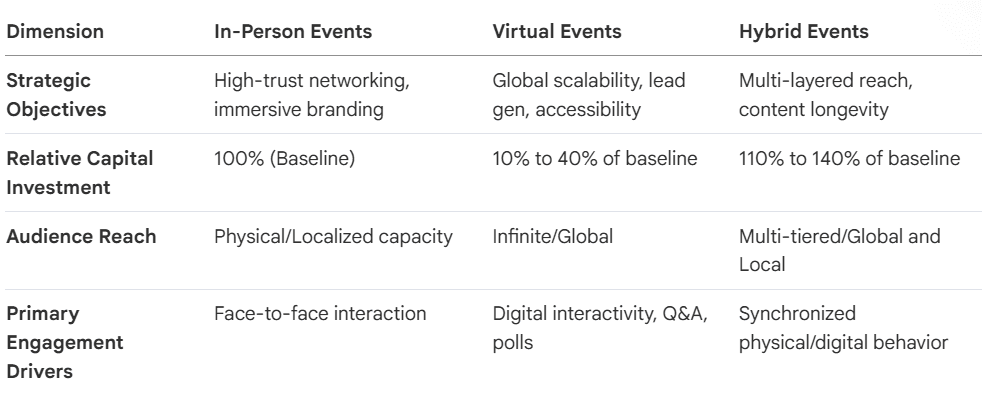
There is no single format that works for every event. Each one comes with different trade-offs between connection, reach, cost, complexity, and data.
In-Person Events
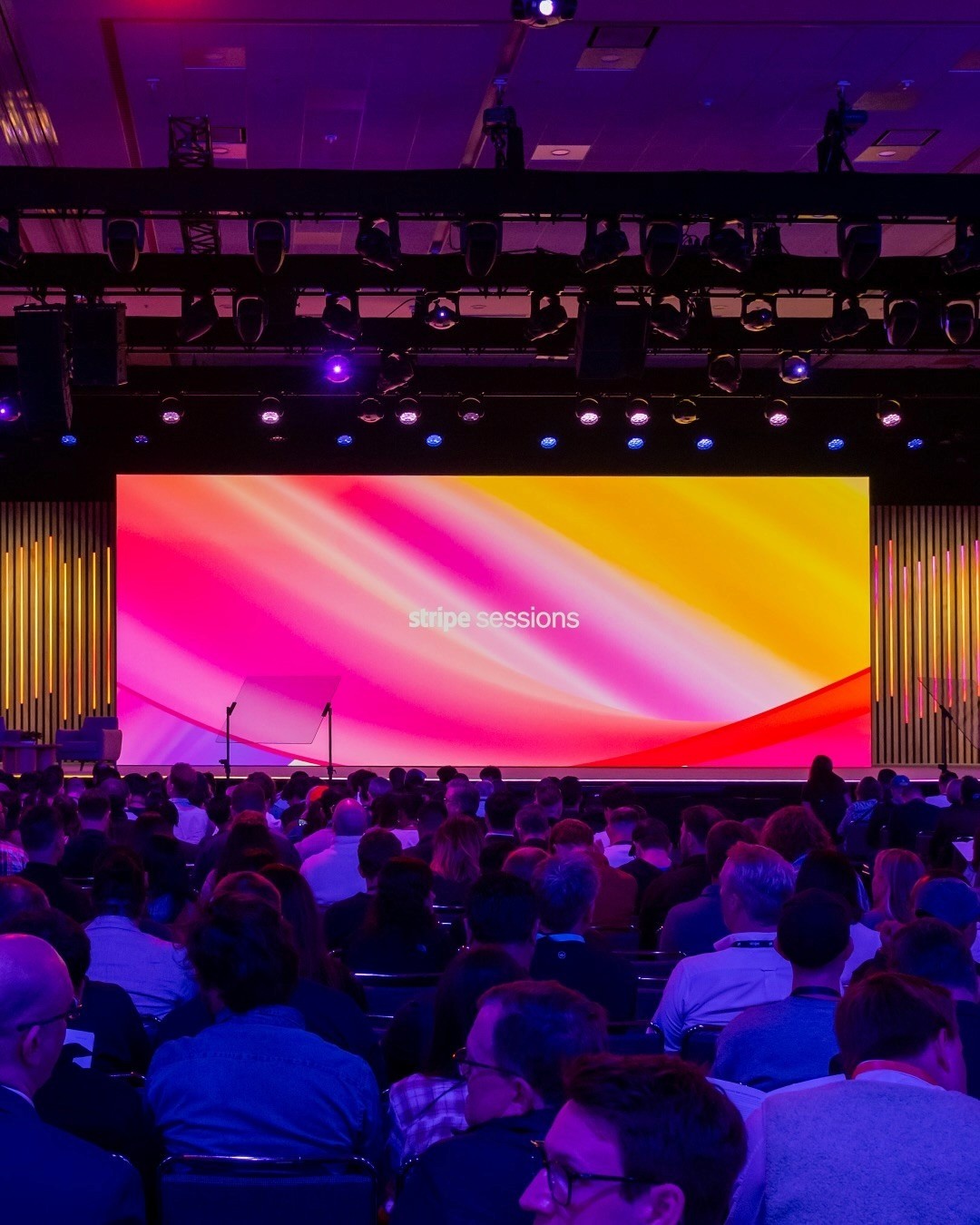
In-person events are strongest when face-to-face interaction is central to the experience. They work well for:
Conferences
Executive summits
Product launches
Networking events
Trade shows
Team retreats
The biggest advantage here is connection. Attendees can have spontaneous conversations, build relationships, experience the venue, and interact with products or brands in a physical environment.
The trade-off, though, is cost and capacity.
You need a venue, catering, staffing, production, travel, and other on-site infrastructure. Your audience is also limited by venue capacity and the practicalities of getting people to the location.
Virtual Events
Virtual events are useful when reach, accessibility, and flexibility matter most. They work well for:
Webinars
Training sessions
Product education
Global meetings
Community events
Specialist sessions
Obviously, here you remove many of the physical costs associated with in-person events. There is no venue, catering, or attendee travel, and people can join from almost anywhere.
You also gain access to useful digital engagement data, including session attendance, poll participation, Q&A activity, and content views.
The challenge is maintaining attention. Without a physical room, your content, pacing, and interaction need to work harder to keep people engaged.
Hybrid Events
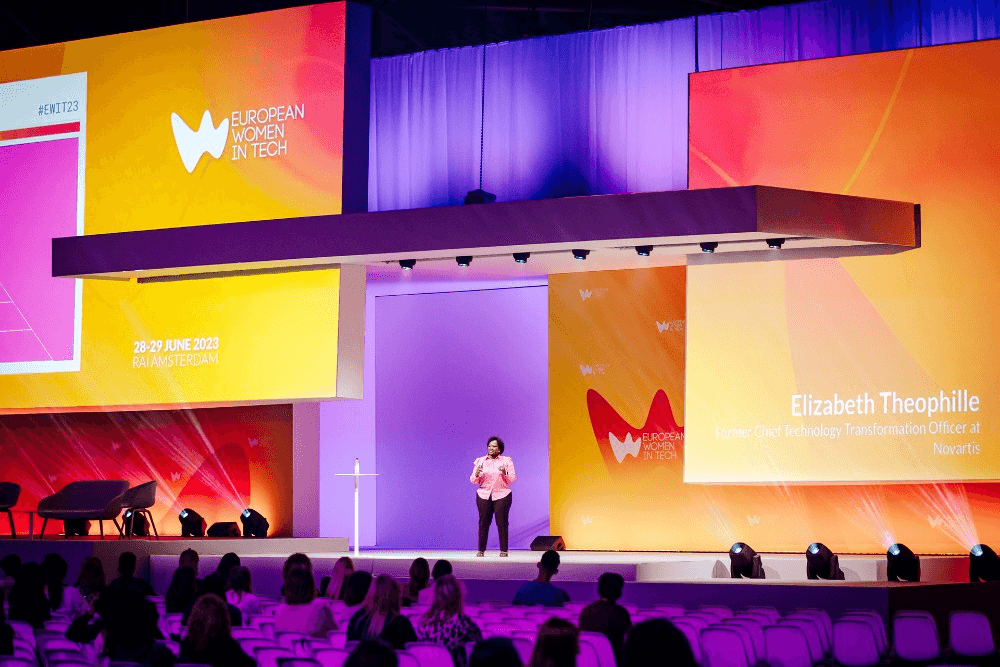
Hybrid events combine physical and digital audiences. That gives you wider reach, but it also means you're managing two experiences at once.
You need to account for:
In-room attendee experience
Remote attendee experience
Broadcast production
Streaming technology
Internet connectivity
Digital engagement
Additional technical support
Hybrid events are at roughly 110% to 140% of an in-person baseline, depending on the production setup. That means hybrid shouldn't be treated as the cheaper middle ground between physical and virtual.
Choose it when the additional reach and accessibility justify the added production complexity.
Get Your Technology and Connectivity Right
If your event includes a digital audience, connectivity becomes part of the attendee experience.
A weak connection can disrupt a presentation, interrupt a livestream, or leave remote attendees unable to participate.
The source material uses these planning ranges:
Standard corporate meetings: 100–400 Mbps
Broadcast-quality virtual or hybrid events: 3–8 Gbps
These are planning reference points rather than universal requirements. Your actual needs depend on audience size, streaming quality, platform requirements, and how many people are using the connection at the same time.
Don't assume venue Wi-Fi is enough.
Before signing a contract, ask:
What internet speed is included?
Is the connection dedicated?
Are there bandwidth limits?
Is additional bandwidth available?
What does the upgrade cost?
For a hybrid event especially, those questions belong in your initial budget, not in the week before the event.
Choose Your Event Technology Around the Format
Your technology stack should support the event you're trying to run.
There are several platforms for events, each serving different use cases:
Mingloft: An all-in-one event operations platform designed to streamline planning, budgeting, vendor coordination, and execution across in-person, virtual, and hybrid events.
Planning Pod: Useful for event planning, floor plans, timelines, and budget management.
Cvent: Suited to large-scale enterprise events and registration.
Bizzabo: Strong for B2B events, lead attribution, and CRM integration.
Remo: Built around interactive virtual networking.
BoomPop: Focused on venue sourcing and event coordination
Don't choose a platform because it has the longest feature list. Choose it based on what your team actually needs to manage.
Build the Budget Around the Format
The format you choose determines where your money goes. A useful starting point is the 60-30-10 model:
60% Core Experience: Venue, catering, and production
30% Supporting Operations: Marketing, labor, and logistics
10% Contingency: Unexpected costs and late changes
Treat this as a starting framework, not a fixed rule.
A product launch might need a larger share of the budget for branding, staging, lighting, and production. A technical workshop might need more for AV, connectivity, and specialist equipment.
Your budget should reflect what makes the event valuable to attendees.
Build Revenue Into the Format Decision
Your format affects more than costs. It also affects how you generate revenue.
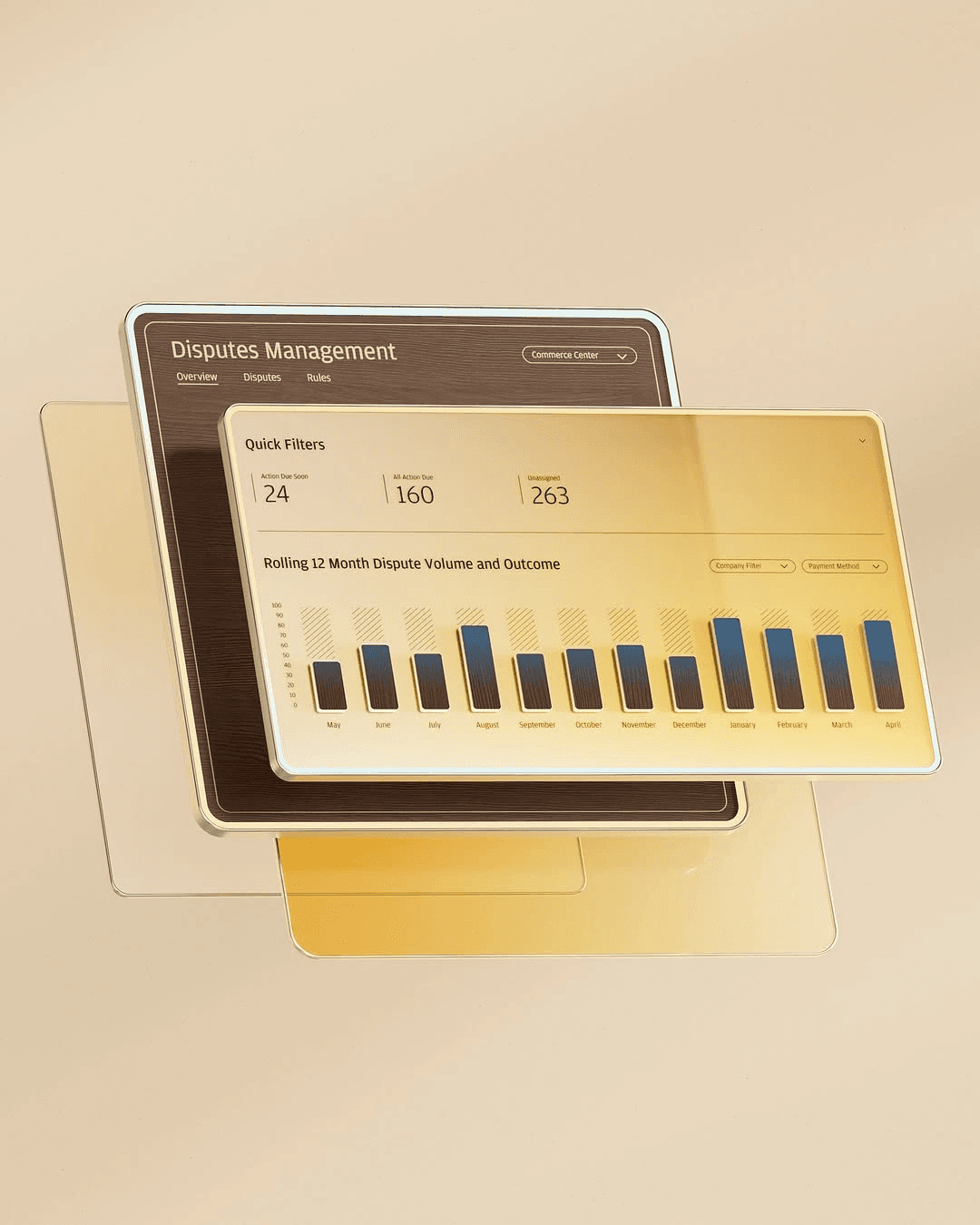
A simple tiered ticket structure might include:
Early Bird: 10–25% below standard pricing
Standard: Your baseline rate
Late or On-Site: 15–20% above standard pricing
Early pricing can encourage faster bookings and give you an earlier view of demand.
Late pricing allows you to capture last-minute demand and account for costs that appear closer to the event.
Depending on the format, you can also generate revenue through:
Sponsorships
Exhibitor packages
Premium sessions
VIP experiences
Paid networking opportunities
On-demand content
Virtual and hybrid events also give you more opportunities to extend the life of your content through recordings and sponsored digital experiences.
Don't Let Hidden Costs Decide for You
The biggest financial surprises often sit outside the headline venue price.
Look closely at:
Drayage: Fees for moving freight from a loading dock to the event or booth space
Union labor: Overtime and weekend multipliers
Empty crate storage: Charges for storing shipping materials
Load-in and load-out: Additional venue charges outside the standard event window
Outside vendor fees: Charges for using your own AV or production team
Music licensing: Public performance fees where applicable
These costs matter because they affect the true cost of each format.
A venue that looks cheaper on paper might become more expensive once you add production, labor, connectivity, and vendor fees.
Negotiate Before You Sign
Your contract protects your budget as much as your spreadsheet does.
Pay particular attention to:
Attrition clauses: The source material recommends negotiating the threshold from 80% toward 70% where possible.
Outside vendor fees: Ask whether you can bring your own AV or production team without additional "babysitting" or exclusivity charges.
Load-in and load-out windows: Make sure your venue agreement covers the time you actually need to build and strike the event.
Cancellation terms: Look for a structure that limits your exposure if plans change.
The goal isn't to negotiate every fee down to zero.
It's to make sure you understand what you're agreeing to and where the financial risk sits.
Compare Formats by ROI, Not Just Cost
The cheapest format isn't automatically the best format. Start with the outcome you want. A standard financial ROI formula is:
Event ROI = ((Net Revenue - Total Costs) ÷ Total Costs) × 100
Include the full cost of the event when you calculate this, including relevant staff time, marketing, production, and technology. Then look beyond the financial result.

A format might also be successful because it improves:
Brand awareness
Attendee satisfaction
Lead generation
Networking
Community growth
Sales pipeline
Accessibility
Think About the Data Each Format Gives You
The format also changes what you learn about your audience.
Virtual events typically provide detailed digital behavior data, such as session attendance, watch time, clicks, and poll participation.
In-person events provide stronger physical interaction, but some behaviors are harder to measure without check-in, badge, app, or other tracking technology.
Hybrid events have the potential to connect physical attendance with digital engagement, giving organizers a broader view of the attendee journey.
The format you choose should support both the experience you want to create and the information you need to learn from it.
Read more on what to track before, during, and after your event.
So, Which Event Format Should You Choose?
Choose in-person when connection, networking, hospitality, or physical experience are central to the event.
Choose virtual when reach, flexibility, accessibility, or cost efficiency are the priority.
Choose hybrid when you need both physical presence and broader digital reach and have the budget, technology, and team to manage both experiences properly.
There is no universally "best" format. There is only the format that makes the most sense for your audience, goals, budget, and resources.
Choose the Format That Supports the Experience
Event format should make your goals easier to achieve, not create another problem for your team.
Start with your budget, dates, headcount, and space requirements. Then work through the technology, revenue model, hidden costs, and ROI before you commit.
Most importantly, budget for the event you are actually running, not the version presented in the first venue quote.
Ready to make event planning easier, from budget to execution? Try Mingloft free today.