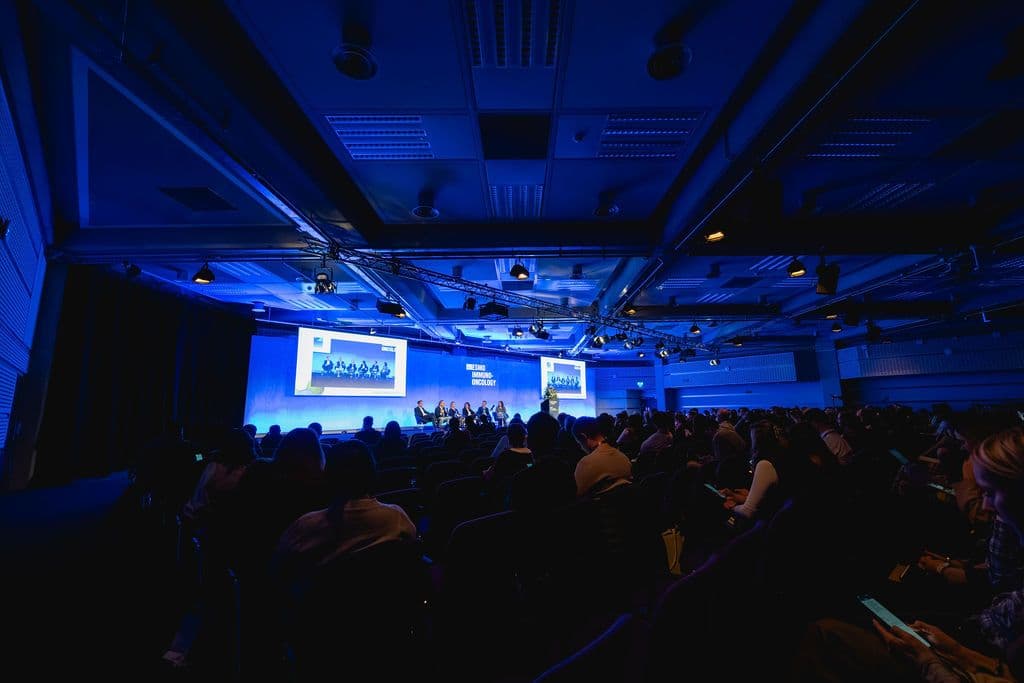
AI events drove growth at London's QEII Centre. Here's what that means for event planners and how to build AI-focused experiences that sell.
The QEII Centre in London, one of the UK's most prominent conference and events venues, has pointed to AI-themed events as a genuine driver of its recent commercial growth. That is not a throwaway line in a press release.
When a venue of that scale and track record singles out a content theme as a revenue contributor, it tells us something real about where demand is sitting right now.
We think it is worth unpacking what this means for planners, and what it takes to build an AI-focused event that actually delivers for organisers and attendees alike.
Why AI as a theme works so well for live events
There is an obvious reason organisations want to gather around AI: most of them are trying to figure out what it means for their industry, their workforce, and their strategy. That shared uncertainty creates exactly the conditions that make live events valuable.
Attendees arrive with genuine questions, not just passive interest
Speakers and panellists have real debates to have, not polished talking points to recite
Networking sessions have a natural starting point, because almost everyone in the room is navigating the same thing

That combination of curiosity, urgency, and shared context is rare. Planners who recognise it and build experiences around it are in a strong position.
What separates a good AI event from a generic conference with AI in the title
The risk, of course, is that the label gets slapped onto events that do not earn it. We have all sat through panels where the topic sounds timely, but the content is thin. Attendees notice, and they do not come back.
The events that the QEII Centre's results suggest are working tend to share a few qualities:
A specific angle, not AI in general, but AI in legal, AI in healthcare, AI in creative industries, something with a defined audience and a real set of problems to address
Formats that invite participation, workshops, roundtables, live demonstrations, rather than lecture-style delivery
Honest curation of speakers who are doing things, not just talking about them
How Mingloft helps planners build and sell thematic event experiences
One of the practical challenges with building a thematic event is that you need the whole operation to reflect the experience you are promising.

Registration, ticketing, agenda management, attendee communication, and on-the-day logistics all need to work together. When they do not, even a strong content programme gets undermined by the friction that attendees feel before they even walk through the door.
That is the gap Mingloft is built to close.

Planners using our platform can manage every stage of an event in one place, which means the experience of buying a ticket, receiving information, choosing sessions, and arriving on the day feels considered and consistent. For a thematic event where the brand promise matters, that consistency is not a nice-to-have.
Our take
The QEII Centre story is a useful data point, but the broader point is this: there is a real and growing audience of professionals who want to come together around AI, and most of them have not yet found the event that properly serves them.
Planners who move thoughtfully, pick a specific angle, design for genuine participation, and run a tight operation have a genuine opportunity in front of them right now.
Mingloft Team
Event planning insights and platform updates from the Mingloft team.
Share