Learn what event tracking is, why it matters, which attendee interactions to monitor, and how to use event data to improve engagement, measure event success, and plan better events.
You can have thousands of registrations and still struggle to understand whether your event was actually successful. Yes, registration numbers tell you who signed up, but they don't reveal which sessions captured attention, whether attendees engaged with sponsors, or where people dropped off during the event experience.
That's where event tracking becomes valuable. Because the real challenge isn't collecting data, but actually knowing which attendee interactions matter and using them to see the patterns behind engagement, satisfaction, and event performance.
In this guide, you'll learn how to use event tracking to measure and improve event success:
What event tracking is and why it matters
Which attendee interactions to track
How event data improves event performance
Event tracking best practices and common mistakes
Key metrics, tools, and reporting strategies
What Is Event Tracking in Event Management?
Event tracking is the process of monitoring and recording attendee interactions before, during, and after an event.

People socializing at an event
It captures specific actions such as registering for an event, selecting a session, downloading resources, or visiting a sponsor booth, along with details like when the action happened, who performed it, and any relevant context.
Unlike basic website analytics that focus on page views or registration numbers, event tracking shows how attendees interact throughout the event journey.
It helps you, as the event organizer, understand which sessions attract the most interest, where attendees engage the most, and where they lose interest or drop off.
Why Does Event Tracking Matter?
Registration numbers tell you how many people signed up. Event tracking tells you what those attendees actually did.
Instead of relying on assumptions, organizers can use event data to understand attendee behavior, improve event experiences, and measure the success of every stage of the event.
With event tracking, you can:
Identify the most popular sessions: Measure attendance, session participation, resource downloads, and other engagement metrics to understand which topics and speakers generated the most interest.
See how attendees engaged throughout the event: Track interactions such as agenda views, booth visits, networking activities, and time spent in sessions to understand how attendees moved through the event experience.
Measure sponsor performance: Monitor booth visits, QR code scans, resource downloads, and other sponsor interactions to demonstrate engagement and report on sponsor ROI.
Evaluate networking opportunities: Track meeting requests, connections made, discussion participation, and other networking activities to understand which experiences encouraged meaningful attendee interactions.
Improve future events with data: Use attendee behavior to identify what worked well, uncover areas for improvement, and make more informed decisions about future event planning.
What Should You Track Throughout the Event Lifecycle?
There are many things to track throughout events, but we recommend these four:
Registration & Ticketing:
The registration process is your first opportunity to understand attendee behavior.
Tracking these metrics helps you identify what's encouraging registrations and where people drop off before completing them.
Registration starts and completions: Compare how many people begin the registration process with how many finish it. A large gap may indicate that your registration form, pricing, or checkout process needs improvement.
Registration abandonment: Track where attendees leave the registration process to identify potential barriers, such as lengthy forms, technical issues, or unclear pricing.
Ticket sales: Monitor ticket purchases by ticket type, pricing tier, or purchase date to understand buying patterns and forecast attendance.
Promo code usage: Measure how discount codes perform across marketing campaigns to see which channels generate the most registrations.
Mingloft helps you get clarity on everything, tickets and ticket sales.
Pre-Event Engagement:
Attendee engagement begins long before the event starts. Tracking pre-event activity helps you understand what captures attention and how prepared attendees are before they arrive.
Agenda downloads and speaker profile views: Identify the sessions, topics, and speakers generating the most interest.
Session selections: Track which sessions attendees add to their schedules to estimate attendance and identify high-demand topics.
Mobile app downloads: Measure how many attendees are engaging with your event platform before the event begins.
Reminder email engagement: Monitor email opens and clicks to evaluate the effectiveness of your pre-event communication and identify attendees who may need additional reminders.
During the Event:
Live event data shows how attendees interact with your event in real time, helping you measure engagement and identify opportunities to improve the experience.
Check-ins and badge scans: Confirm attendance and understand how attendees move through the event.
Session attendance and resource downloads: Measure participation in sessions and identify which presentations, documents, or resources receive the most engagement.
Booth visits and networking meetings: Track attendee interactions with exhibitors, sponsors, and networking opportunities to measure engagement and demonstrate sponsor value.
Live polls and Q&A participation: Measure audience participation to understand which sessions encourage the most interaction.
Post-Event Engagement:
The attendee journey doesn't end when the event is over. Post-event tracking helps you measure long-term engagement and identify opportunities to build stronger relationships with attendees.
Survey completion: Collect attendee feedback to understand what worked well and where future events can improve.
Certificate downloads: Track how many attendees complete certification or continuing education requirements.
On-demand content views and community engagement: Measure continued interaction with session recordings, event communities, and shared resources after the event.
Repeat registrations: Monitor how many attendees return for future events to measure loyalty and long-term event success.
If you want a checklist with full details on how to track each metric above, read our last guide here.
How Does Event Tracking Power Better Event Management?
Upfront, event tracking turns attendee interactions into actionable insights.

People analyzing data
Instead of you having to rely on assumptions or post-event feedback alone, you use real data to:
- Understand Attendee Behavior
Event tracking helps you, as an event organizer, understand how attendees interact with different parts of an event. By monitoring actions such as session attendance, agenda views, resource downloads, and networking activity, it's easier to identify which topics, speakers, and experiences generate the most interest.
These insights reveal engagement patterns that help organizers better understand what attendees value and where improvements may be needed.
- Improve Session Engagement
Tracking session attendance, participation, and drop-off points helps you evaluate the effectiveness of your event content.
For example, low attendance or early exits may indicate scheduling conflicts, less relevant topics, or presentation issues.
On the other hand, highly attended sessions with active Q&A participation and resource downloads can help identify speakers and formats that resonate most with attendees.
These insights make it easier to build stronger event agendas in the future.
- Reduce Registration Drop-Off
Not everyone who starts registering completes the process. Event tracking helps you identify where potential attendees abandon registration, whether it's due to lengthy forms, pricing concerns, or technical issues.
And by addressing these barriers, you can simplify the registration experience and improve conversion rates.
- Optimize Networking Opportunities
Networking is often one of the biggest reasons people attend events. Tracking meeting requests, connection rates, discussion participation, and networking activity helps event organizers understand which opportunities encourage meaningful interactions.
These insights can later be used to improve networking formats, refine matchmaking features, and create more valuable attendee experiences.
- Demonstrate Sponsor ROI
Sponsors always want clear evidence that their investment delivered results. Event tracking provides measurable data such as booth visits, QR code scans, resource downloads, sponsored session attendance, and lead captures.
This information helps you, as the event organizer, demonstrate sponsor value, strengthen relationships, and support future sponsorship opportunities.
- Plan Better Future Events
Every event generates valuable insights that can improve the next one.
By reviewing attendee behavior across the entire event lifecycle, event organizers can identify popular sessions, improve event schedules, optimize venue layouts, allocate resources more effectively, and deliver experiences that better meet attendee expectations.
Rather than relying on assumptions (which are usually unreliable), future planning is guided by real attendee data.
How Event Tracking Works
Once you understand the value of event tracking, the next step is understanding how attendee interactions become meaningful insights.
Every action, whether someone registers for an event, joins a session, scans a badge, or downloads a resource, is captured as data.

An event badge
That data is then organized and analyzed to help organizers understand attendee behavior and make better decisions.
Event name: A clear description of the action, such as Registration Started, Session Attended, or Resource Downloaded.
Timestamp: The exact date and time the interaction occurred, making it possible to map the attendee journey from start to finish.
Attendee: A unique identifier, such as an email address, attendee ID, or registration ID, that links the action to a specific participant.
Properties: Additional details that provide context, such as the session name, ticket type, event location, device, or referral source.
Here’s a quick example:
Event : Properties
Session Attended : Session name, room, duration, attendee type
The Event Tracking Workflow
Every tracked interaction follows a simple process:
Attendee Action
An attendee acts, such as registering for the event, checking in, joining a session, visiting a sponsor booth, or downloading a resource.
↓
Tracking Technology
Your event website, mobile app, or event platform detects the interaction and records it automatically.
↓
The event is stored alongside additional details, such as the attendee, session, location, or device, creating a complete record of the interaction.
↓
Analytics Dashboard
The collected data is organized into reports and dashboards that make it easier to monitor registrations, attendance, engagement, and other event metrics.
↓
Insights & Action
Organizers analyze the results to identify trends, measure event performance, and make informed decisions that improve future events.
Event Tracking Best Practices for Success Events
If you take anything from this blog, remember this: Collecting event data is only the first step.

An event booth
To turn that information into meaningful insights, you need a clear strategy for what they track, how they organize it, and how they manage attendee data.
And that’s where these best practices come in:
1. Define Your Goals Before You Track
One of the most common mistakes organizers make is tracking every available metric simply because they can. This often results in data overload, making it harder to identify the insights that actually matter.
Instead, begin with your event objectives. Ask what you want to learn from attendee behavior and which interactions will help answer those questions.
For example, if your goal is to improve networking, prioritize metrics such as meeting requests, connection rates, and networking session participation. If you're measuring sponsor success, focus on booth visits, QR code scans, and lead captures.
Starting with clear business goals ensures every metric you track supports a meaningful decision.
2. Create an Event Tracking Plan
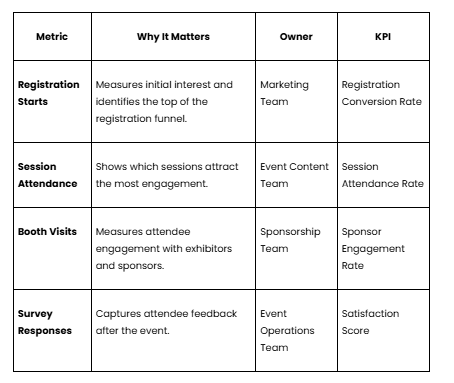
An event tracking plan provides a shared framework for everyone involved in planning, managing, and analyzing your event.
It helps teams collect data consistently, reduces reporting errors, and ensures everyone is working toward the same objectives.
Your tracking plan should clearly define:
Which attendee interactions will be tracked
Why each metric matters
Who is responsible for monitoring it
Which KPI it supports
Here’s an example:
3. Focus on Meaningful Metrics
Not every metric provides valuable insight. While it's tempting to measure everything, the most useful data is that which helps improve future events.
Instead of focusing only on high-level numbers like registrations or page views, prioritize metrics that reveal attendee behavior. Session attendance, networking participation, sponsor engagement, resource downloads, and survey responses all provide a clearer picture of the attendee experience.
Focusing on meaningful metrics helps you identify what's working, uncover areas for improvement, and make better decisions for future events.
Use Mingloft to track your event metrics
4. Protect Attendee Privacy
Collecting attendee data comes with the responsibility to handle it securely and transparently. Following privacy regulations such as GDPR and CCPA helps protect attendee information while building trust with your audience.
Here are some good privacy practices we recommend:
Obtain attendee consent before collecting or tracking personal data.
Collect only the data you need to support your event goals.
Protect sensitive information by limiting access to authorized team members.
Be transparent about what information is collected and how it will be used.
Responsible data management not only supports compliance but also strengthens attendee confidence in your event.
5. Regularly Audit Your Tracking
Event tracking should be reviewed before, during, and after every event to ensure your data remains accurate.
Changes to registration forms, event websites, mobile apps, or attendee journeys can affect how data is collected. Regular audits help identify missing events, duplicate records, inconsistent naming, or tracking gaps before they affect your reporting.
By regularly reviewing your tracking setup, you can trust that the insights you use to improve future events are based on reliable, consistent data.
What Are Some Common Event Tracking Mistakes?
We see the same patterns every time, but these are the most common ones:
1. Tracking Too Many Metrics
Trying to track every attendee interaction often creates more confusion than clarity. Collecting excessive data makes reports harder to interpret and shifts attention away from the metrics that truly matter.

Illustration of tracking too many metrics
Instead, focus on the interactions that support your event goals.
If your priority is improving networking, measure networking activity.
If you're evaluating sponsor performance, prioritize booth visits, lead captures, and resource downloads. Every metric you track should have a clear purpose.
2. Ignoring Attendee Engagement
Registrations and attendance only tell part of the story. Without tracking attendee engagement, it's difficult to understand how people actually experienced your event.
Metrics such as session attendance, poll participation, Q&A activity, networking interactions, and resource downloads provide valuable insights into which parts of the event captured attention and where attendees lost interest.
3. Measuring Registrations Instead of Participation
A successful event isn't defined by registrations alone. High registration numbers don't always translate into active participation.
Track what attendees do after they register, including check-ins, session attendance, networking activity, sponsor interactions, and post-event engagement. These metrics provide a more complete picture of event success.
4. Failing to Define KPIs Before the Event
Collecting data without clear objectives often results in reports that are interesting but difficult to act on.
Before your event begins, identify the key performance indicators (KPIs) that align with your goals.
Whether you're measuring attendee engagement, sponsor ROI, registration conversion, or session attendance, defining KPIs early ensures your tracking strategy supports meaningful outcomes.
Don’t go in BLIND!!
5. Not Sharing Insights with Stakeholders
Event data becomes more valuable when it's shared with the people responsible for improving future events.
Marketing teams, event planners, sponsors, and leadership should all have access to insights relevant to their objectives.
Sharing results across teams encourages better collaboration and helps everyone make more informed decisions. But of course, make sure you are only giving them access to what they should have for privacy concerns.
📌Task delegations in events are one of those things event organizers spend weeks on. This guide clears up everything. Consider giving it a read!
6. Collecting Data Without Taking Action
Collecting data is only valuable if it leads to improvements.
If event tracking reveals low session attendance, registration drop-offs, or limited sponsor engagement, use those insights to refine future events.
The goal isn't simply to measure performance, it's to continuously improve the attendee experience.
7. Overlooking Attendee Privacy
Collecting attendee data comes with the responsibility to protect it.
Always be transparent about the information you collect, obtain consent where required, and comply with privacy regulations such as GDPR and CCPA.
Responsible data practices not only reduce compliance risks but also strengthen attendee trust.
Frequently Asked Questions
What is event tracking in event management?
Event tracking is the process of monitoring attendee interactions before, during, and after an event. It helps organizers understand how attendees engage with registrations, sessions, networking opportunities, sponsors, and other event activities.
What attendee data should I track during an event?
Focus on data that helps measure engagement and event success, such as session attendance, check-ins, booth visits, networking activity, resource downloads, survey responses, and sponsor interactions.
How can event tracking improve attendee engagement?
Event tracking helps organizers identify which sessions, activities, and experiences generate the most interest. These insights can be used to improve content, personalize attendee experiences, and create more engaging future events.
What metrics matter most when measuring event success?
The most important metrics depend on your goals, but common examples include registration completion rates, attendance rates, session engagement, networking participation, sponsor engagement, attendee satisfaction scores, and repeat registrations.
How do you measure sponsor ROI using event tracking?
Sponsor ROI can be measured by tracking booth visits, lead captures, QR code scans, sponsored session attendance, resource downloads, and other attendee interactions with sponsor content.
What tools are used for event tracking?
Event tracking is commonly managed through event management platforms, analytics tools, CRM systems, and reporting dashboards. The best solution depends on your event format, goals, and reporting requirements.
How do I create an event tracking plan?
Start by defining your event goals and KPIs. Then identify the attendee interactions you want to measure, assign ownership for each metric, and document how the data will be collected and reported.
How can I protect attendee privacy while tracking event data?
Be transparent about the data you collect, obtain consent where required, and follow privacy regulations such as GDPR and CCPA. Only collect information that supports your event objectives and protect sensitive data appropriately.
How often should event data be reviewed?
Review your tracking setup before every event to ensure data is being collected correctly. After the event, analyze the results to identify trends, measure performance, and uncover opportunities for improvement
What's the difference between event tracking and event analytics?
Event tracking is the process of collecting attendee interaction data. Event analytics is the process of analyzing that data to understand attendee behavior, measure performance, and support decision-making.
Turn Attendee Data Into Better Events
The most successful event organizers don't rely on registration numbers alone. They track attendee behavior throughout the event lifecycle to understand what drives engagement, where friction exists, and how to improve future event experiences.
That's exactly what event tracking makes possible, and why event management platforms like Mingloft help teams capture, analyze, and act on the data that matters most.
Ready to make more informed event decisions from accurate data? Try Mingloft free.
And if event budgeting is something you're curious about then this next read is for you: Here's how to spot overspending before it derails your event.
Mingloft Team
Event planning insights and platform updates from the Mingloft team.
Share