Operations
8 min read
How to Delegate Event Planning Tasks Effectively: Frameworks for High-Growth Teams
Learn how to delegate event planning tasks effectively using proven frameworks like the 70% Rule, RACI matrix, and Situational Leadership. Discover what to delegate, what to keep, and how AI tools like Mingloft’s Aria streamline event execution

Event delegation is what separates overwhelmed event managers from high-performing ones.
Most planners start by doing everything themselves: vendors, speakers, registrations, logistics, and last-minute fixes. That works at small scale, but as events grow, it creates bottlenecks, delays, and decision fatigue.

A small-scale community event
At that point, the problem is no longer effort. It is structure.
Effective delegation means separating strategic decisions from operational execution and assigning the right work to the right people or systems so event leaders can focus on outcomes, not tasks.
In this article, we’ll cover:
What event planning tasks to delegate
What tasks should not be delegated
The 70% Rule for delegation
Governance vs operations in event management
The RACI framework for role clarity
Situational leadership in event teams
How AI tools like Mingloft’s Aria support delegation
Post-event delegation strategies
So that you know the right tasks to focus on to create unmatched events.
What Event Planning Tasks Should You Delegate?
Not all event work requires leadership input. Anything repeatable, operational, or execution-heavy should be delegated or automated.

Planning strategy session
Routine Administrative Tasks
These tasks consume time but do not require strategic decision-making:
RSVP tracking and reminders
Registration updates
Guest list management
Scheduling confirmations
Data entry
Email follow-ups
These are ideal for automation or junior support roles.
Technical Execution Tasks
These require skill, not leadership oversight:
AV setup and testing
Livestream configuration
Event website updates
Ticketing system setup
Platform integrations
This is where platforms like Mingloft come in handy to systemize event workflows and reduce manual load.
Research and Preparation Tasks
These support decisions but should not consume leadership time:
Vendor sourcing
Venue comparisons
Catering research
Speaker background checks
Sponsorship prospecting
Delegating research shifts the leader from “information collector” to “decision-maker.”
Event-Day Operations
During live execution, delegation becomes critical:
Attendee check-ins
Vendor coordination
Session timing
Speaker logistics
Floor supervision
On-site support
If you are managing these during the event, you are not leading the event, you are operating inside it.
What Event Planning Tasks Should You Not Delegate?
Some decisions define the entire direction of the event and must stay centralized. These include:
Event vision and purpose
SMART objectives
Budget approval
Final agenda approval
Keynote speaker selection
Major contract signing
Sponsorship strategy
These decisions directly affect revenue, brand positioning, and event outcomes.
You should not delegate strategic event decisions such as defining objectives, approving budgets, selecting speakers, and finalizing agendas because they determine revenue, risk, and brand direction.
Core Delegation Frameworks for Event Teams
1. The 70% Rule in Event Delegation
The 70% Event Delegation Rule
Most event leaders fail at delegation because of perfectionism. The 70% Rule solves this:
If someone can complete a task at roughly 70% of your standard, delegate it.
The remaining improvement comes from repetition, feedback, and experience.
Why it matters:
Without this rule, leaders become bottlenecks for every task.
With it, teams scale execution without waiting for perfection.
2. RACI Matrix for Event Delegation
As event teams grow, the biggest failure point is s unclear ownership.
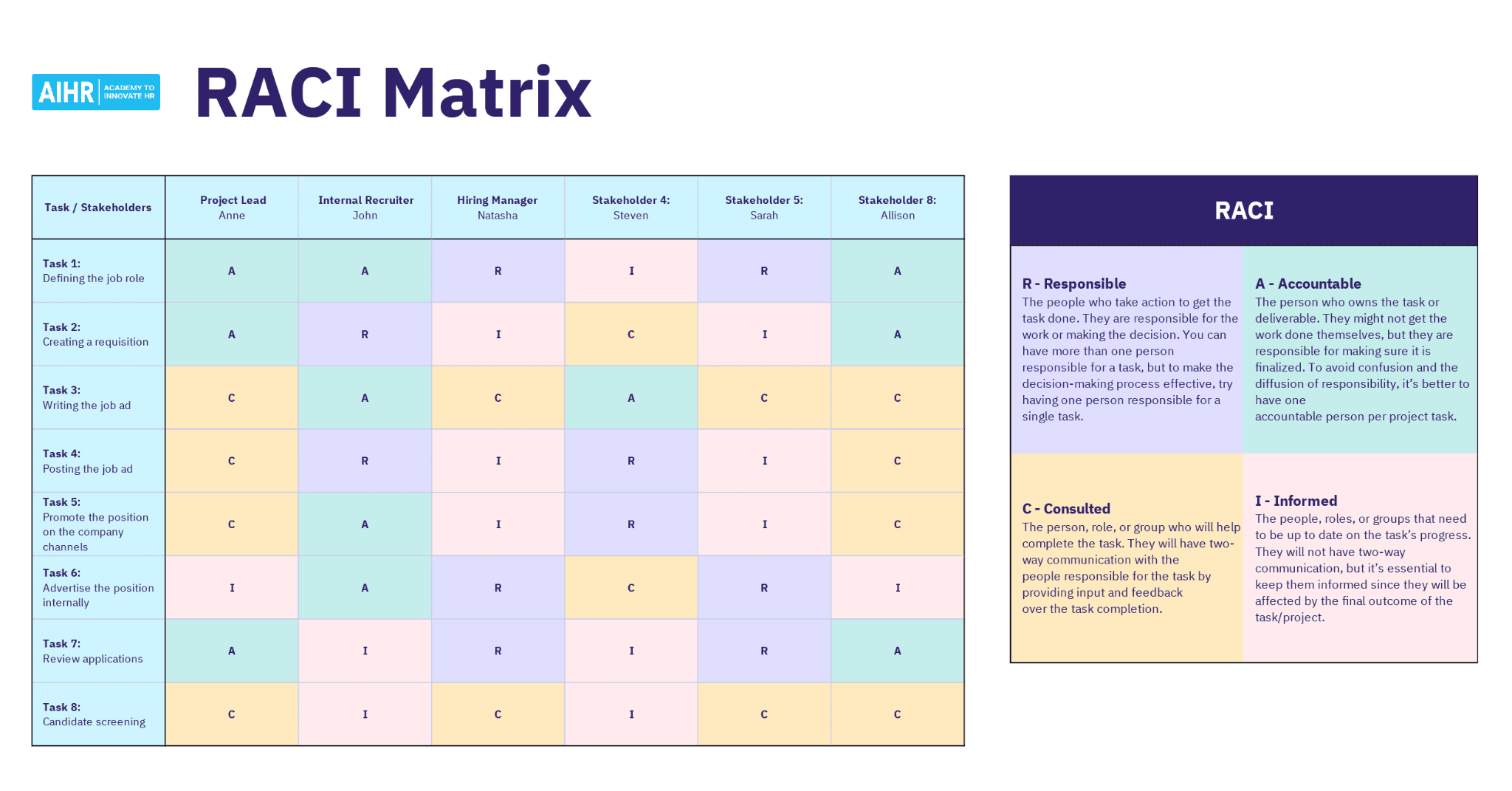
The RACI Matrix, courtesy of AIHCR
Tasks get duplicated. Deadlines slip. People assume “someone else is handling it” but in reality, no one is fully responsible.
The RACI framework solves this by making ownership explicit.
What is RACI?
RACI is a simple responsibility model used to define who does what in a project:
Responsible: the person doing the work
Accountable: the person who owns the outcome
Consulted: people who provide input before decisions are made
Informed: people who are kept updated on progress
And when applied correctly, RACI removes assumptions from execution.
Example: Event Registration Setup
Here is what it looks like in a real event workflow:
Task: Registration setup
Responsibility lead: Ops Lead
Accountable: Event Manager
Consulted: Marketing
Informed: Leadership
The structure is simple, but the impact is significant.
The Ops Lead executes. The Event Manager owns the result. Marketing provides input if needed. Leadership stays informed without interfering in execution.
The Rule That Makes RACI Work
There is one rule that determines whether RACI works or fails: Only one person should be Accountable per task.
Once you assign multiple accountable owners, responsibility disappears.
Decisions slow down because people wait for alignment instead of acting. When something fails, ownership becomes unclear. When something succeeds, credit is unclear.
Accountability must be singular, or it does not function.
This is why structured event teams are now relying on Mingloft to enforce clear ownership within workflows rather than relying on informal coordination.
Get your event workflow aligned here.
3. Situational Leadership in Event Teams
Delegation fails because people are managed the same way regardless of readiness.
Situational Leadership solves this by matching leadership style to capability.
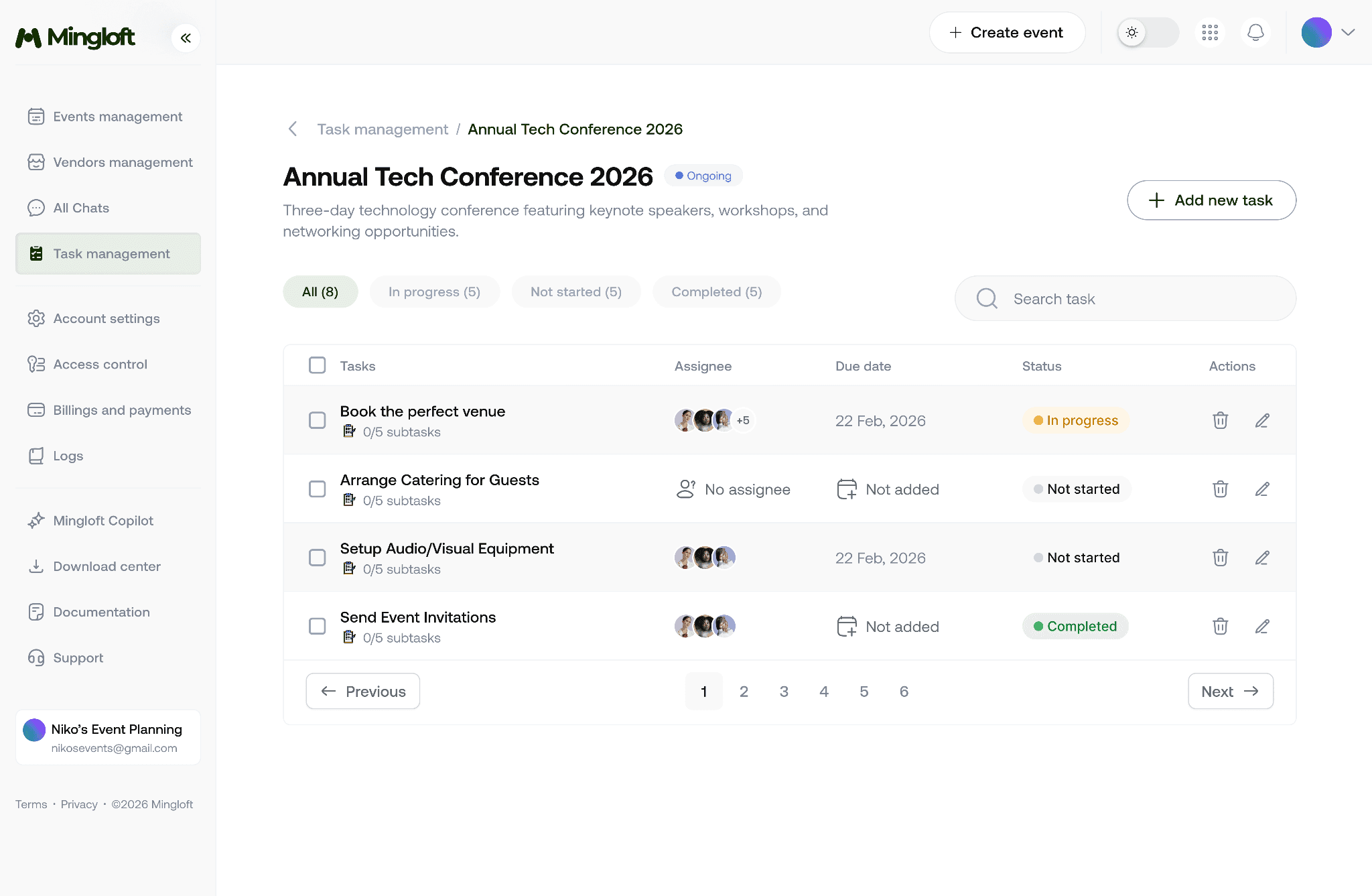
Task assignment and management on Mingloft
S1: Telling (Beginners)
Used when someone is new to the task.
They need:
Clear instructions
Step-by-step direction
Frequent check-ins
S2: Selling (Developing)
Used when someone understands the basics but still lacks confidence.
They need:
Context behind decisions
Coaching during execution
Explanation of priorities
This stage is about alignment, not control.
S3: Participating (Capable but unsure)
Used when someone has the skill but hesitates in decision-making.
They need:
Collaboration
Shared decisions
Support without takeover
Here, leadership shifts from directing to enabling.
S4: Delegating (Experienced)
Used when someone is fully capable.
They need:
Full autonomy
Ownership of outcomes
Minimal intervention
At this stage, leadership becomes oversight.
Common Delegation Mistakes in Event Planning
Most delegation problems come from two extremes:
1. Micromanagement
This happens when leaders stay too close to execution.
Constant progress checks
Rewriting completed work
Excessive approval layers
The result is predictable: teams stop making decisions. They wait for instructions instead of solving problems.
2. Abandonment
This is the opposite failure.
No clear expectations
No structure or guidance
No feedback loops
The result is also predictable: confusion, errors, and rework.
Why Most Event Teams Are Switching to AI for Event Delegation
Modern delegation is no longer only about people. It now includes systems.
AI tools like Mingloft’s Aria extend delegation into execution automation.
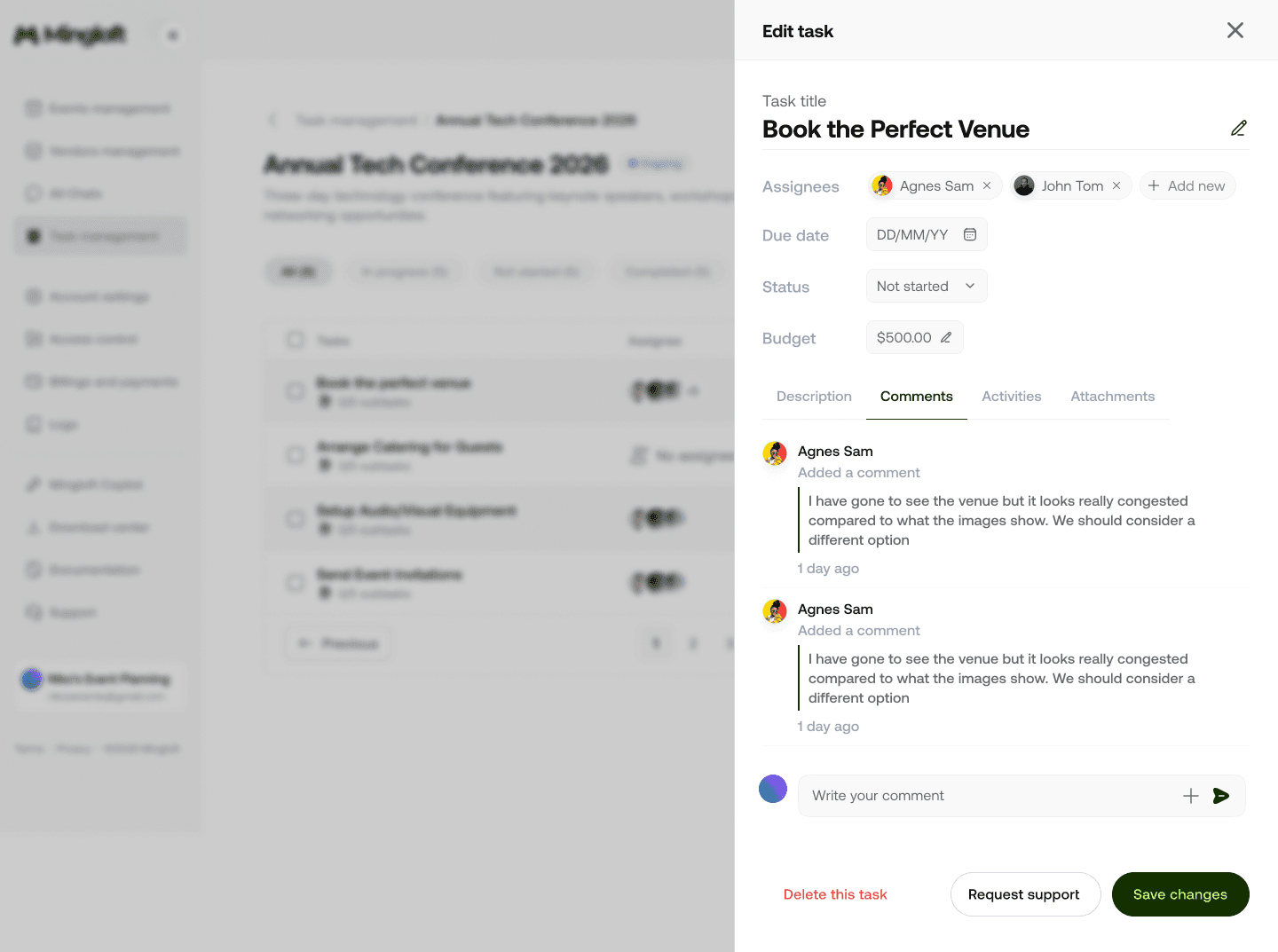
Task management on Mingloft
Instead of manually coordinating tasks across tools, planners can assign work directly:
Sending invitations
Creating ticket types
Assigning tasks
Managing workflows
Tracking execution progress
This eliminates unnecessary switching between platforms and reduces manual coordination.
Post-Event Work Should Also Be Delegated
Most teams make a structural mistake here: they delegate planning and execution, but reclaim post-event work. That breaks continuity.
Post-event work is not administrative cleanup. It is performance data.
Tasks that should be delegated:
Thank-you emails
Feedback collection
Attendance reporting
Sponsor reporting
Data consolidation and analysis
This is where insights are created.
If this work is centralized or rushed, every future event starts without learning from the last one.
If you’re interested in seeing how to delegate your post-event workflow,
Get on a call with our demo team here.
Conclusion
Event leadership does not scale when leaders stay involved in everything. It scales when clarity replaces control.
That requires five shifts:
Keep strategic decisions close
Delegate operational execution
Use RACI to define ownership
Match leadership style to readiness
Use AI to handle repeatable work
When these systems are in place, your role changes.
You are no longer the person completing tasks. You are the person designing how work flows across people and systems.
So start with something simple: remove yourself from three repetitive tasks this week, and focus on what actually needs you.
And whenever you’re ready, start delegating event tasks with Mingloft today!
Frequently Asked Questions (FAQs)
What are the primary responsibilities of an event project manager?
An event project manager oversees the strategic planning and execution of an event. Their responsibilities include defining objectives, managing budgets, coordinating vendors, overseeing communication, monitoring progress, mitigating risks, and evaluating outcomes after the event concludes. They ensure all moving parts align with the event's goals and attendee expectations.
What event planning tasks should I absolutely not delegate?
You should retain ownership of high-level strategic responsibilities such as defining the event's purpose, setting SMART objectives, approving final agendas, selecting keynote speakers, approving budgets, and signing major vendor contracts. These decisions have long-term implications for revenue, reputation, and event success.
What is the 70% Rule and why is it important for event planners?
The 70% Rule states that if someone can perform a task at roughly 70% of your standard, you should delegate it. The rule helps leaders avoid perfectionism, develop team capability, and focus their time on strategic work rather than operational tasks.
How can AI tools like Aria assist with event delegation?
AI copilots like Aria can automate repetitive administrative work such as sending invitations, creating ticket types, assigning tasks, and monitoring event performance.
They also provide proactive alerts for issues such as low RSVPs, overdue tasks, and budget concerns, helping planners maintain oversight without manual monitoring.
How do I handle last-minute event changes without micromanaging?
The best approach is to establish clear ownership, checkpoints, and contingency plans before the event begins. Rather than taking over every issue, empower team members to make decisions within defined boundaries while escalating only critical problems. This maintains agility without creating dependency.
How do you measure the success of a delegated event task?
Success should be measured against predefined objectives and performance metrics. These may include attendance rates, ticket sales, revenue, attendee satisfaction, vendor feedback, or project completion timelines.